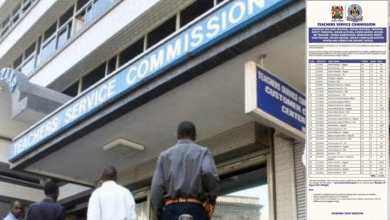
The Teachers Service Commission (TSC) has introduced stricter guidelines for the recruitment of senior school teachers, outlining 51 approved subject combinations that will determine eligibility for employment under the Competency-Based Education (CBE) system.
In a notice dated April 10, TSC emphasized that only senior school teachers trained within the approved subject pairings will qualify for registration and hiring in senior schools. Graduates whose training falls outside these combinations risk missing out on teaching opportunities.
According to the commission, the specified subject combinations will guide teacher training, registration, and recruitment. Candidates pursuing unapproved pairings may not be considered for employment in public secondary schools.
The approved combinations have been classified into five main categories: Sciences, Languages, Mathematics, Humanities, and Technical subjects. Among these, Languages account for the highest number of combinations, while Mathematics has the least.


TSC aims to streamline the recruitment process, eliminate confusion in subject pairing, and ensure adequate coverage of all learning areas. It also provides direction to teacher training institutions on suitable subject combinations aligned with senior school specialization pathways.
At the same time, the commission is collaborating with the Ministry of Education to train teachers in Chinese, addressing a growing shortage in foreign language instruction.
Within the Language category, 14 combinations have been approved. These include pairings such as English with Literature, and Kiswahili with subjects like CRE, History, Geography, IRE, Home Science, and Physical Education.
In the Mathematics category, six combinations have been cleared, including Mathematics paired with Business Studies, Geography, Computer Studies, Chemistry, Biology, and Physics.
Senior school teachers manage active classrooms where students take center stage. This role requires different skills than traditional teaching.
Teachers guide group discussions, facilitate peer learning, and manage collaborative projects. They ensure every student participates, not just the top performers. This means understanding each learner’s strengths and needs.
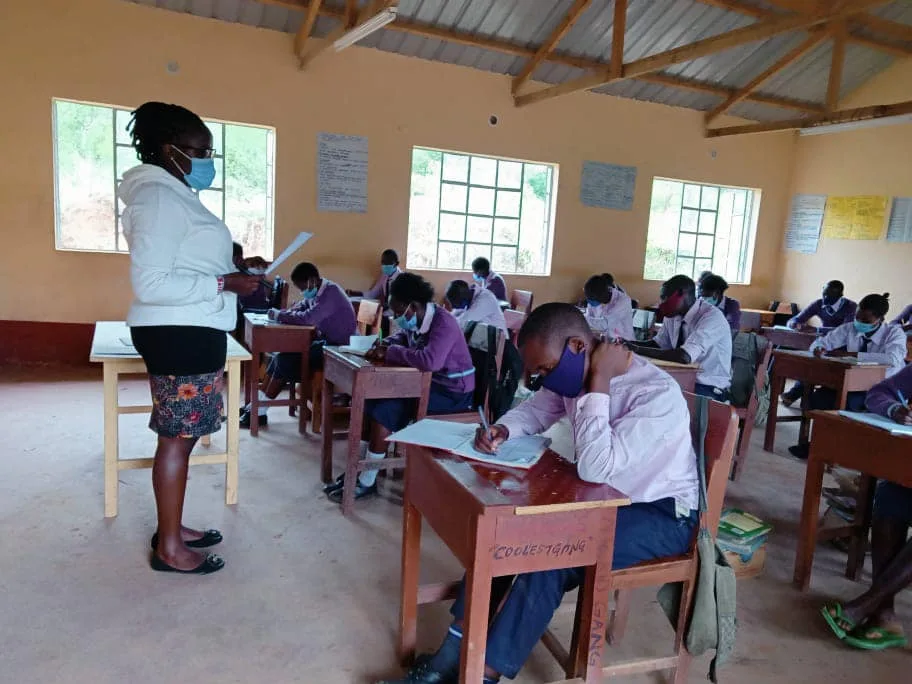
Differentiation becomes crucial. Teachers adapt tasks for different abilities within the same pathway. They provide extra support for struggling learners and challenge advanced students. This personalized approach helps every student succeed.
Teachers also serve as mentors. They help students make pathway choices, connect subjects to careers, and provide guidance on future opportunities. This mentoring role extends beyond academics to personal development.