Why West Pokot Leaders Are Demanding a Share of Turkana Oil Benefits
Leaders and residents of West Pokot County have renewed calls for an equitable share of benefits from oil production in neighboring Turkana County, arguing that the multi-billion-shilling project relies heavily on water resources drawn from West Pokot.
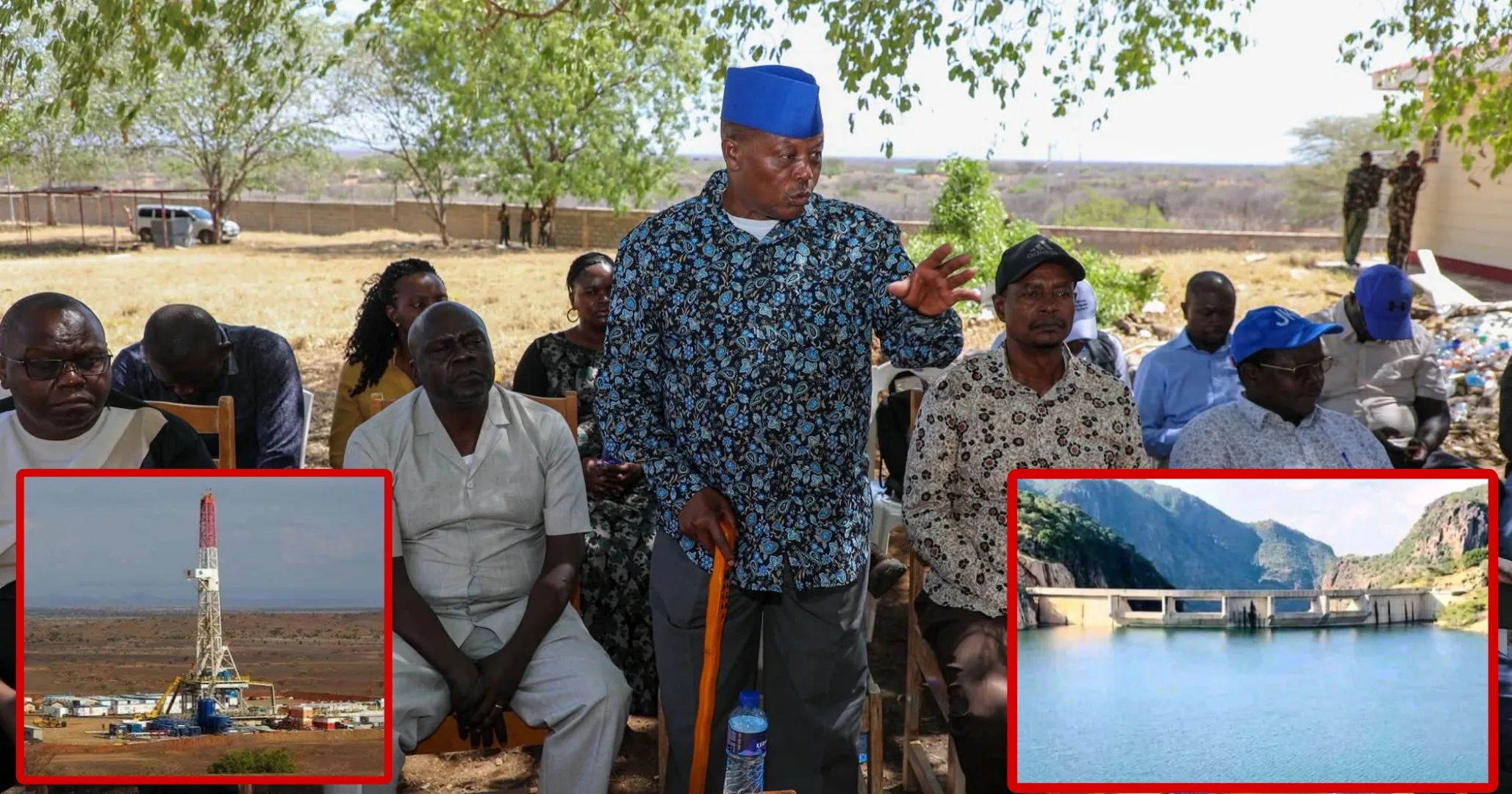
The demands were made during a public hearing on the South Lokichar Field Development Plan convened in Turkwel by a joint committee of the National Assembly’s Departmental Committee on Energy and the Senate Standing Committee on Energy.
Addressing the forum, participants from West Pokot insisted that the use of water from the Turkwel Dam in oil operations entitles the county to a fair share of revenues, employment opportunities, and development projects linked to the extraction of oil in South Lokichar.
Hon. Julius Mawathe, MP for Embakasi South, supported the position, stating that communities contributing critical resources to national projects must benefit proportionately. He noted that water sourced from West Pokot will be central to oil production at the South Lokichar fields.
Residents further demanded a balanced employment arrangement between the Turkana and Pokot communities, proposing a 50–50 sharing of job opportunities. They argued that while Turkana hosts the oil fields, West Pokot plays an indispensable role by supplying water, making the project interdependent.
Gulf Energy’s Social Performance Lead, Bethwell Sang, told the hearing that the company opted to draw water from the Turkwel Dam after Lake Turkana was ruled out due to its status as a UNESCO World Heritage Site. He added that part of the water infrastructure developed for oil production would also support local communities.
On irrigation and food security, the Resident Engineer at the National Irrigation Authority, Eng. Felix Shiundu, revealed that the government plans to roll out irrigation projects covering 60,000 acres in West Pokot. He said the initiative aims to boost food security while addressing long-standing conflicts along riverbanks where irrigation and livestock watering compete.
“To reduce conflicts and improve efficiency, we will adopt sprinkler irrigation systems instead of traditional furrows,” said Eng. Shiundu, adding that the irrigation programme would significantly enhance agricultural productivity in the county.
He further disclosed plans to establish six water supply points to support irrigation across 2,000 acres, split equally between Turkana and West Pokot counties.
Residents welcomed the proposed irrigation projects but maintained that broader issues of benefit-sharing remain unresolved. They called on the national government, county administrations, and oil companies to establish clear frameworks governing resource use, employment, and revenue-sharing to prevent future conflict.

Comments are closed.