South Sudan To Build Dry Port In Naivasha After Securing 10 Hactares Of Land
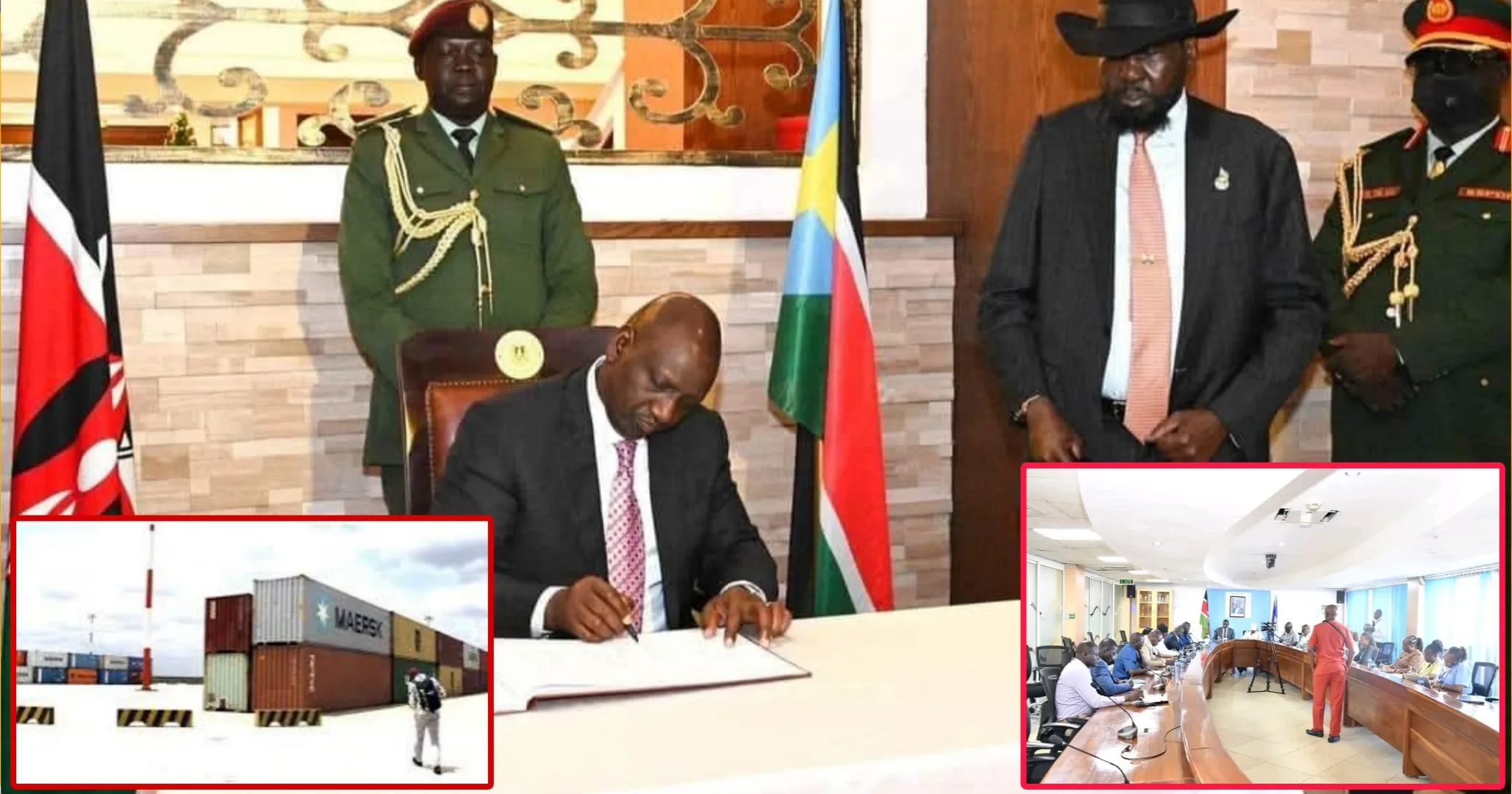
The Government of South Sudan has officially received 10 hectares of land from the Government of Kenya for the construction of a dry port in Naivasha, marking a major milestone in strengthening regional trade and logistics cooperation.
The land, located within the Naivasha Special Economic Zone, was handed over on Wednesday at the Naivasha Inland Container Depot. The allocation was made during the second term of former Kenyan President Uhuru Kenyatta.
Speaking at a joint press conference, South Sudan Revenue Authority (SSRA) Commissioner General William Anyuon Kuol confirmed that the land had been officially received.
“The place that has been given to us by the Government of Kenya to the Government of South Sudan—we would like to assure the public, especially the people of South Sudan, that today we have managed to see the site and receive it officially,” Anyuon said.
He said the land will be developed into an inland container depot, also known as a dry port, to serve South Sudan’s cargo.
According to Anyuon, the dry port will help reduce congestion at the Port of Mombasa, cut delays and storage costs, improve cargo tracking and customs compliance, speed up delivery of goods to South Sudan, and reduce the risk of consignments being auctioned due to prolonged clearance delays.
“Within the shortest time—four to five months—we will make this dry port operational,” he said.
The SSRA boss noted that the facility will bring relief to South Sudanese traders who have been losing goods and money due to congestion at the coast. He added that consumers are also expected to benefit from more stable prices for imported goods.
Meanwhile, Kenya Revenue Authority (KRA) Commissioner General Humphrey Wattanga said the Naivasha Inland Container Depot is a strategic investment aimed at moving cargo away from the coast to ease pressure at the Port of Mombasa.
He said the facility is important not only for Kenya but also for transit cargo destined for neighboring countries, including South Sudan.
Wattanga said the Port of Mombasa is currently facing serious congestion due to a sharp increase in cargo volumes. He attributed the situation to global trade disruptions, regional political events, and temporary closures of alternative trade corridors.
“Most recently, we had post-election periods in Tanzania and the recent elections in Uganda, where for a short time those particular markets were not open,” Wattanga said.
“More cargo from Dar es Salaam was directed to Mombasa, and some cargo could not be evacuated to Uganda on time. These temporary disruptions have contributed to congestion.”
He said Kenyan authorities are working closely with the Kenya Ports Authority to address the situation.
“We have been engaging with KPA Managing Director Captain William Ruto and his team to come up with quick interventions to decongest the port,” Wattanga said.
“Part of the solution is to drive more hinterland and transit cargo into inland container depots like this one – land for neighboring countries such as South Sudan to take advantage of this facility to develop their own dry ports.”
According to Kenya Ports Authority figures, cargo throughput at the Port of Mombasa reached 45.45 million metric tonnes between January and December 2025, representing a 10.9 percent increase compared to the previous year.
The authority says South Sudan ranks third among countries whose cargo passes through the Port of Mombasa, highlighting the country’s heavy reliance on the Northern Corridor.
Officials say the Naivasha dry port is expected to provide a long-term solution to congestion at the coast while strengthening regional trade cooperation and protecting traders from losses linked to delays.
The Naivasha dry port is also expected to play a critical role in facilitating the movement of goods, reducing transportation costs, and improving access to regional and international markets for South Sudan. Once operational, the facility will ease cargo handling along the Northern Corridor, linking South Sudan more efficiently to the Port of Mombasa.

Comments are closed.